Role
Team
Event
Duration
UX/UI Designer
Katrina Cruz, Camilla Delgado, Jasmine Antipuesto
DubsTech Protothon 2025
~28 hours
TL;DR
Too long, didn't read
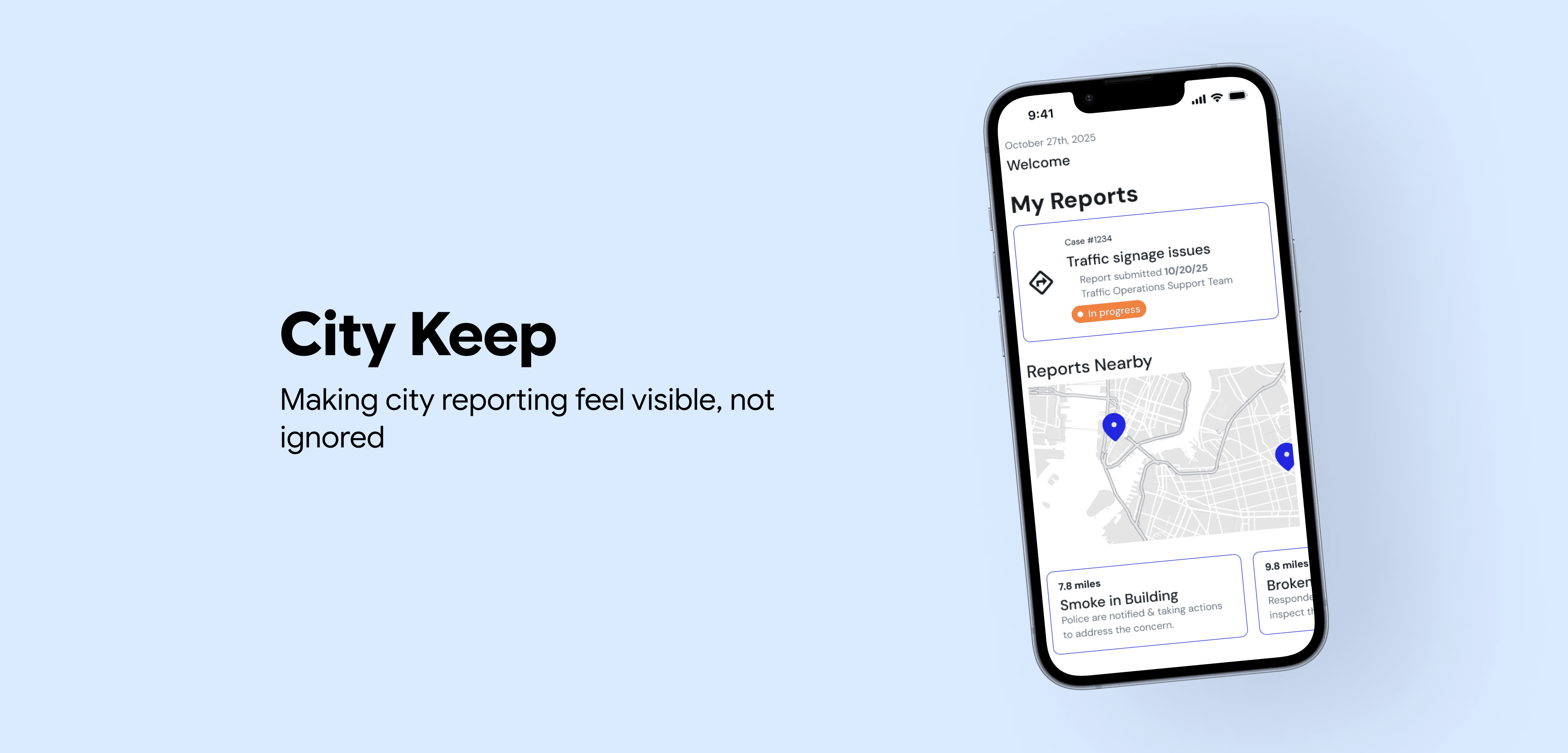
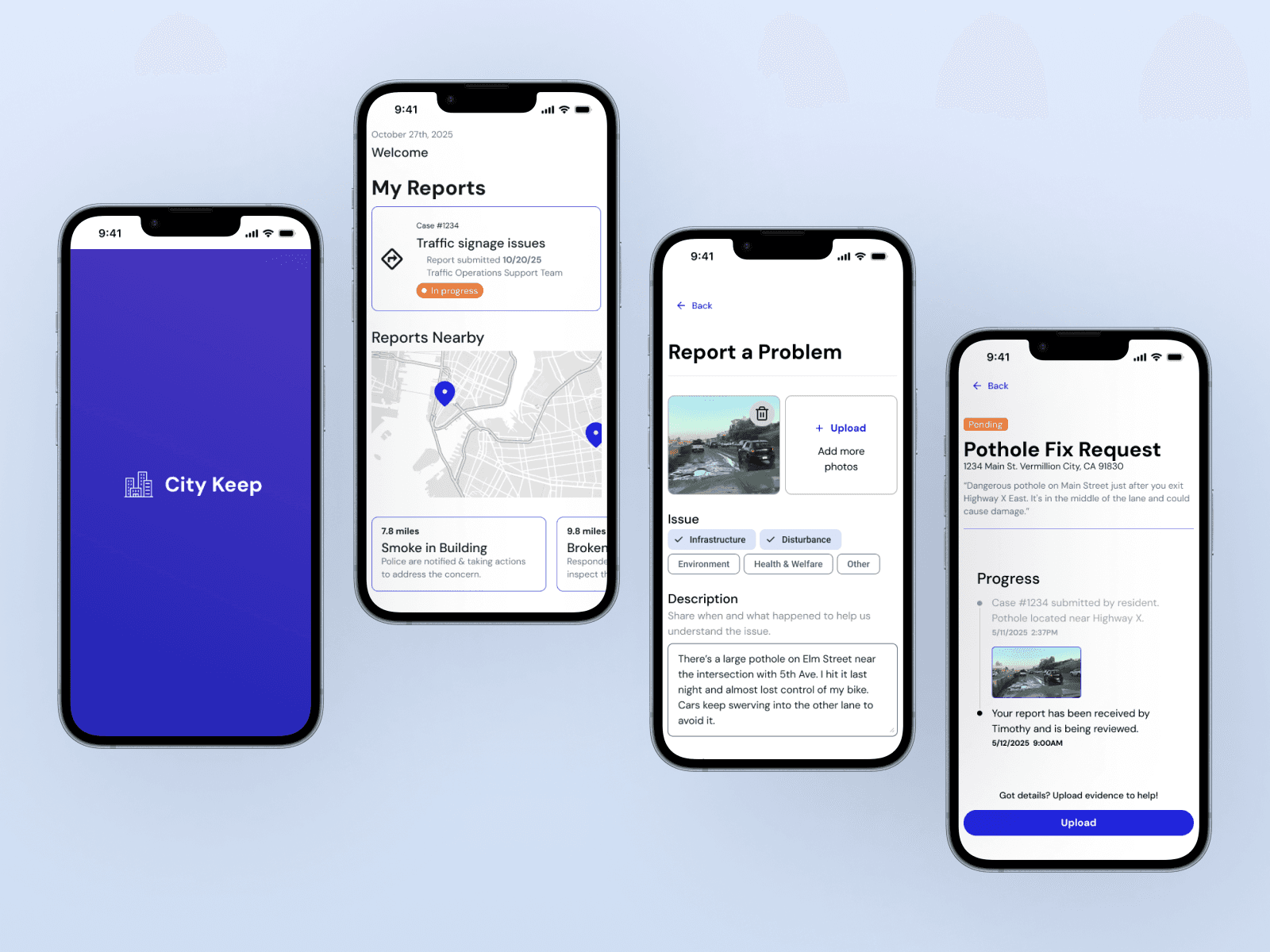
People stop reporting city issues when they feel ignored. We designed a mobile app that makes reporting simple, shows real-time progress, and connects users to actual people handling their case. The result is a system that builds trust and encourages repeat civic participation.
The problem
People stop reporting when nothing happens
Most city reporting tools technically work, but people don’t trust them. Users submit issues like potholes or broken lights, then hear nothing back. Over time, they stop reporting.
This isn’t a usability problem. It’s a trust problem.
What we saw
Existing tools feel cold and one-sided
We looked at 311 apps, community platforms, and feedback tools to understand the space. Some things worked well. Map-based reporting is fast. Simple forms lower effort. Anonymous reporting helps people feel safe.
Map-based reporting and simple forms worked well. But most tools lacked updates, visibility, and any sense of follow-through. The experience felt bureaucratic and one-sided.
Key insight
People want feedback, not just a submission form
We surveyed and mapped feedback from 16 users. Users need to see progress to believe reporting works.
"Since they never seem to care or fix issues, there is not much willingness to report again."
-DIRECT QUOTE FROM SURVEY
Impact
A transparent system increases trust and repeat use
By adding visibility, accountability, and community, the design addresses the real reason people stop reporting.
Users can track progress, see who is responsible, and feel that their input matters. This is designed to increase repeat reporting and engagement with city services.
01
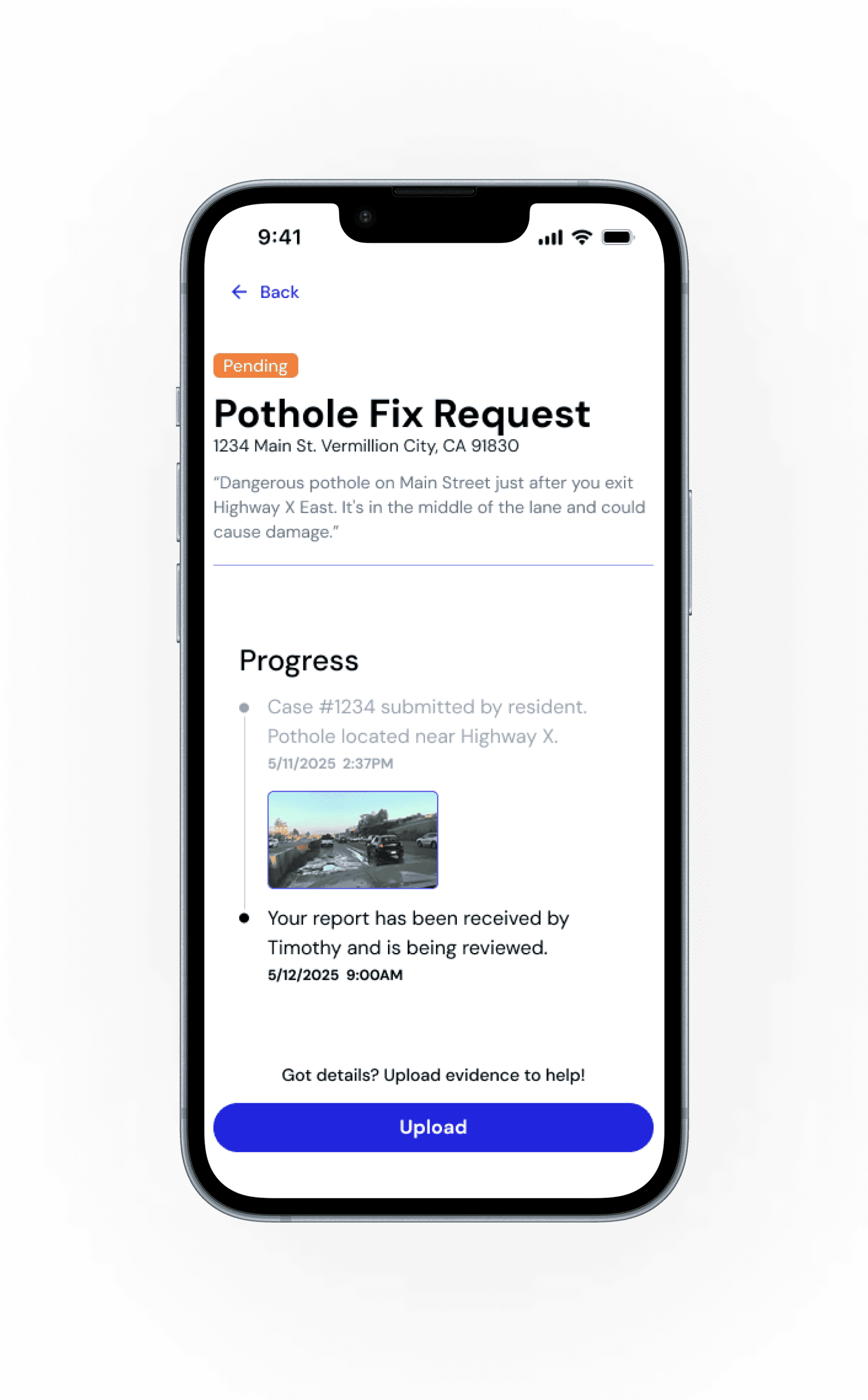
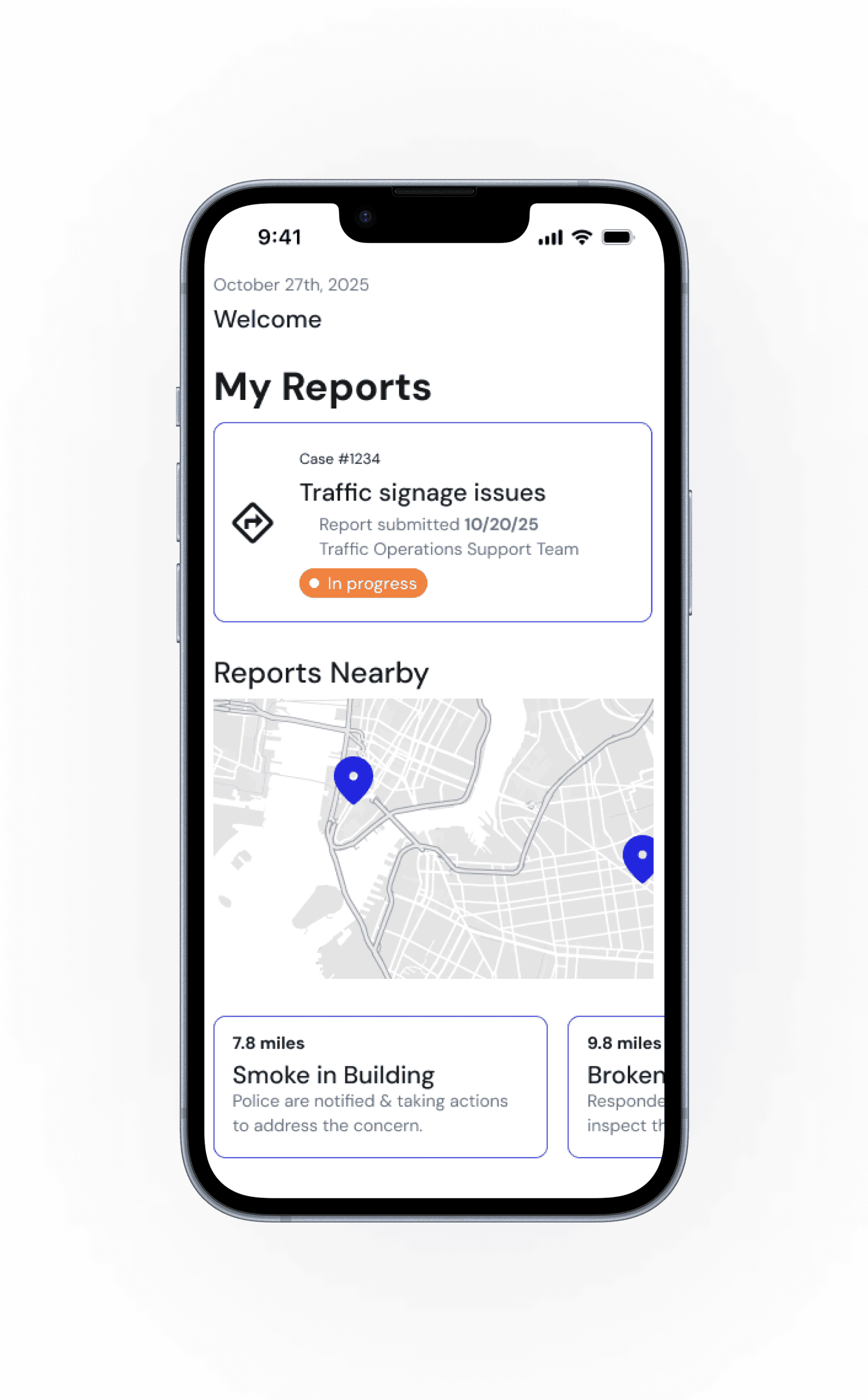
Live Report Tracker
Users can follow their report’s progress with real-time updates and status changes.
02
Assigned Case Manager
Every report is linked to a real person users can see and contact for updates.
03
Connect With Others
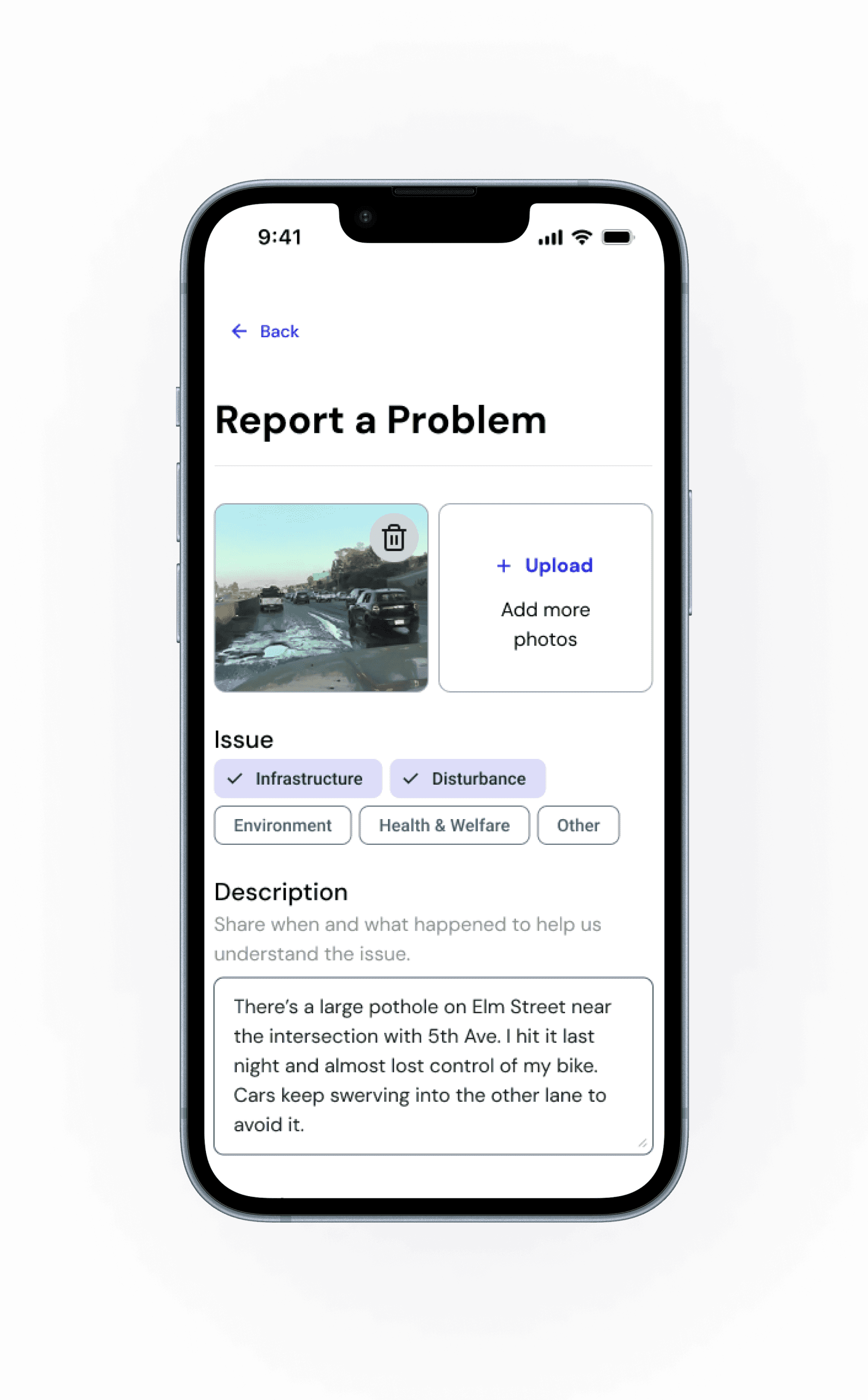
Users can view, support, and add to existing reports to reduce duplicates and amplify impact.
Reflection
This project reinforced that the biggest challenge wasn’t usability, but trust. Solving it required focusing on feedback and transparency, not just improving the interface.
Working within a tight timeline also pushed us to prioritize decisions that directly influence behavior!